 Reviews



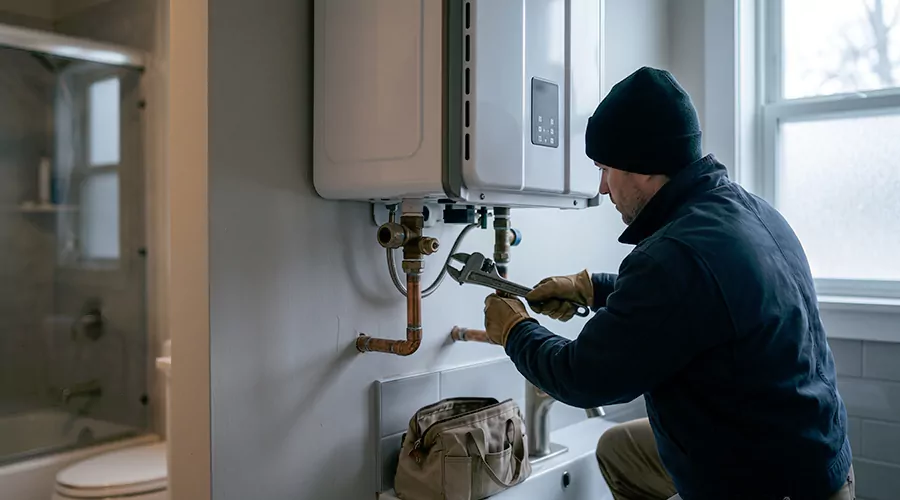
A tankless water heater can freeze when surrounding temperatures fall below freezing and its protection system cannot keep the internal water passages warm. Power outages and exposed supply pipes are common contributing factors. Even a heater with built-in freeze protection can experience problems when external pipes or condensate lines are not adequately protected.
A tankless heater does not store a large reservoir of heated water. Consequently, internal components and connected plumbing can lose heat during prolonged exposure to freezing conditions. If the system is already frozen, avoid repeatedly trying to operate it. Freezing can damage internal components and cause leaks when the ice begins melting.
Why Do Tankless Water Heaters Freeze?
Tankless water heaters can contain small amounts of standing water inside their heat exchangers or connected piping. When that water freezes, the expanding ice can block circulation and damage components. Several conditions increase the risk.
Common causes include:
- Power outage: The heater's electrical freeze-protection system stops operating.
- Interrupted gas supply: Certain gas models lose part of their freeze-protection capability.
- Exposed external piping: Supply lines freeze even when the heater itself remains protected.
- Cold installation location: Garages and exposed exterior walls increase heat loss.
- Strong drafts: Moving cold air removes heat from vulnerable components.
- Blocked condensate drain: Ice prevents condensate from leaving a condensing heater.
- Improper winterization: Water remains inside the heater while the property is unheated.
- Inadequate pipe insulation: Connected piping becomes vulnerable during severe cold.
Navien identifies power interruptions and exposed plumbing among the conditions that can allow freezing despite built-in protection.
How Does Freeze Protection Work?
Many tankless water heaters include internal systems designed to reduce freezing risk. These may include electric heating elements or internal circulation features. However, the protection depends on the appliance's design and operating conditions. Rinnai states that certain models can provide freeze protection at temperatures as low as -22°F for indoor models or -4°F for outdoor models when their specified installation conditions are met. These ratings require appropriate power and gas supplies. They do not automatically apply to exposed external pipes.
The exact protection limits vary by manufacturer and model. A heater's internal freeze protection should never be treated as proof that every connected water line is protected.
What Are the Signs of a Frozen Tankless Water Heater?
A frozen heater may produce reduced water flow or stop delivering hot water entirely. However, the same symptoms can result from other problems. Look for several clues rather than relying on one symptom.
Common warning signs include:
- Hot-water flow stops during freezing weather.
- Cold water continues working while hot water does not.
- The hot-water flow becomes unusually weak.
- An error code appears on the heater.
- Exposed piping develops visible frost.
- Ice forms around an external valve.
- The heater shuts down unexpectedly.
- The condensate drain appears frozen.
- Unusual noises occur during attempted operation.
- Water begins leaking as the system warms.
Navien identifies absent hot-water flow and visible frost among the possible signs of freezing. It also notes that relevant error codes vary according to the affected components. An error code alone cannot confirm that the heat exchanger has frozen.
How Can You Tell Which Component Is Frozen?
A tankless water heater consists of several water-carrying components. Freezing can affect different parts of the installation. Understanding the possible location helps prevent unnecessary disassembly.
| Affected Component | Possible Symptom | Main Concern |
|---|---|---|
| Cold-water inlet | Hot-water flow stops | Water cannot enter the heater |
| Hot-water outlet | Reduced or absent flow | Heated water cannot leave |
| Heat exchanger | Heater stops operating | Possible internal damage |
| External supply piping | Visible ice or frost | Pipe rupture risk |
| Condensate drain | Drainage error or shutdown | Condensate cannot leave |
| Internal valve | Restricted movement | Potential valve damage |
A frozen external pipe may be accessible without opening the appliance. A suspected frozen heat exchanger is different because its internal condition cannot be confirmed through ordinary external inspection.
Why Can a Heater Freeze During a Power Outage?
Electrical power is required for the freeze-protection systems used by many tankless water heaters. When power is interrupted, those systems cannot operate normally. The risk increases when freezing weather continues for an extended period. For certain gas models, keeping the gas supply available is also part of the manufacturer's normal freeze-protection instructions.
Navien advises keeping power connected during freezing weather when the unit is intended to remain operational. If power or gas will be unavailable, the appliance must be winterized according to its model-specific instructions. A planned shutdown is therefore different from leaving a functioning heater connected during cold weather. Do not disconnect a heater's power as a routine preventive measure when its freeze protection depends on electricity.
Can External Pipes Freeze While the Heater Remains Protected?
Yes. Internal freeze protection does not necessarily prevent exposed supply pipes from freezing. A heater may contain functioning internal protection while an uninsulated pipe outside the appliance becomes blocked by ice. This problem is particularly relevant to outdoor installations. A pipe can also freeze inside an unheated garage or another exposed area.
Rinnai recommends protecting external pipes and valves with suitable insulation or approved heat-tracing arrangements. The manufacturer's installation instructions determine which protection measures are suitable for the specific model.
Can a Frozen Condensate Drain Shut Down the Heater?
Condensing tankless water heaters produce condensate during operation. This water normally leaves through a designated drainage arrangement. If the condensate line freezes, the heater may detect a drainage or operating problem and shut down. A frozen condensate line can therefore cause an apparent heating failure even when the main water passages have not frozen.
Possible signs include:
- A shutdown during freezing weather.
- A model-specific error code.
- Ice near an exposed condensate line.
- Water backing up inside the condensate drainage system.
- Recurring shutdowns during severe cold.
Navien identifies frozen condensate drains as one possible cause of cold-weather operating problems. Do not bypass a condensate safety system or operate the heater with a blocked drain.
What Should You Do if Your Tankless Heater Is Frozen?
A suspected frozen heater should not be forced to operate. Ice can restrict water movement and may already have damaged internal components. The safest initial response is to identify the model and follow its specific frozen-unit instructions.
General precautions include:
- Stop repeated attempts to run hot water through the heater.
- Check whether the cold-water supply works elsewhere.
- Identify any visible frost on external piping.
- Record the appliance's error code if one appears.
- Keep the heater's surrounding area free of additional freezing exposure.
- Avoid opening the appliance housing.
- Do not apply an open flame or extreme heat to the piping.
- Check for visible leaks from a safe position.
Some manufacturers provide specific procedures for thawing their appliances. Navien publishes a model-dependent process for responding to freezing. Its instructions include switching off the heater's normal operation and checking the system for leaks after thawing. Do not apply those instructions automatically to a different manufacturer's product.
What Should You Avoid When Thawing a Frozen Heater?
Excessive heat and uncontrolled thawing can damage components or create an electrical hazard. The heater may also contain a split pipe that becomes visible only after the ice melts.
Avoid these mistakes:
- Applying a blowtorch or open flame.
- Using an excessively hot heat gun.
- Pouring boiling water over the heater.
- Opening electrical covers while moisture is present.
- Forcing valves that appear frozen.
- Repeatedly resetting a heater with no water flow.
- Restarting the appliance before inspecting for leaks.
- Assuming that restored water flow proves the heater is undamaged.
A cracked heat exchanger may begin leaking only after its internal ice has melted.
How Much Does Frozen Tankless Heater Repair Cost?
The cost depends on which components were affected. A frozen external pipe may require a different repair from a damaged internal heat exchanger. The following estimates reflect U.S. pricing reported in 2026.
| Repair Type | Typical Cost |
|---|---|
| General tankless repair range | 150–1,300 |
| Average tankless repair | Approximately $600 |
| Pipe replacement on a tankless system | 200–500 |
| Heat-exchanger repair | 500–1,300 |
| Routine descaling or flushing | 150–350 |
These figures describe common tankless repair categories. They are not a published average specifically for freeze damage. Severe freezing can affect several components and increase the final cost.
When Should You Call a Professional?
Professional inspection is appropriate when the heater may have suffered internal freeze damage or the manufacturer requires a trained technician to complete the thawing procedure.
Seek assistance when:
- The heat exchanger may be frozen.
- Water leaks after thawing.
- A pipe appears split or distorted.
- The heater repeatedly displays an error code.
- A gas-related component may be affected.
- The condensate drain remains frozen.
- The unit does not resume normal operation.
A technician can inspect internal components and determine whether any damage has occurred.
How Can You Prevent Your Tankless Heater From Freezing?
Freeze prevention begins before temperatures fall below freezing. The correct precautions depend on the appliance's installation and the manufacturer's instructions.
Useful preventive measures include:
- Keep the required power supply available.
- Maintain the gas supply when specified for normal freeze protection.
- Insulate exposed water pipes.
- Protect vulnerable external valves.
- Keep approved vent and condensate arrangements clear.
- Review backup power options where outages are common.
- Winterize the unit before extended periods without heating or power.
- Follow the exact model's draining instructions.
Rinnai and Navien both emphasize that internal protection does not replace proper protection of connected external piping.
Conclusion
A tankless water heater frozen during cold weather may have lost its power-dependent freeze protection or developed ice inside exposed plumbing. External pipes can freeze even when the heater itself remains protected. Avoid forcing the appliance to operate or using excessive heat during thawing. Follow the manufacturer's model-specific instructions and inspect for leaks before restarting. Prepare vulnerable piping before the next period of freezing weather.
Frequently Asked Questions
Can a tankless water heater freeze if it has freeze protection?
Yes. Power loss or exposed external piping can still allow freezing.
Should I unplug my heater during freezing weather?
Not as a routine precaution. Many units require electricity for their internal freeze-protection systems.
Can freezing damage the heat exchanger?
Yes. Expanding ice can damage internal water passages and cause leaks after thawing.
Will a frozen heater always display an error code?
No. Error codes depend on the manufacturer and which components are affected.
Does freeze damage normally qualify for warranty coverage?
Coverage depends on the manufacturer and warranty terms. Some manufacturers specifically exclude damage caused by freezing.